Tuesday, October 16, 2012

Perfect Tomatillo Salsa Verde

If you want to know how to make the perfect salsa verde with those weird green tomato-looking things with a peel (aka tomatillos), you should definitely try this recipe!  I adapted this recipe from one that looked promising:


Ingredients:
- 1-2 lbs tomatillos
- 1/2 onion
- 1 jalapeno (seeds removed unless you like a lot of heat)
- 2 cloves of garlic
- 1/4 cup of cilantro
- a pinch of cumin, paprika, salt and pepper

Recipe for Tomatillo Salsa Verde:

1) Begin with the tomatillos. Peel the skin off and rinse the tomatillos under some water.  Cut in half and place the cut-side down on a pan. Place under the broiler for 4-5 minutes until there is a nice char on the outside of the tomatillos.


2) Dump the broiled tomatillos into a food processor with onion, jalapeno, cilantro, garlic, cumin, paprika, salt and pepper.  Pulse until desired chunkiness.  I prefer mine to be fairly smooth.

Enjoy on top of some huevos rancheros, pulled pork tacosfish tacos or chips.

Tuesday, October 9, 2012

Rice University's Centennial Celebration

Rice Institute President Edgar Odell Lovett opened the Rice Institute on October 12, 1912 and this week Rice University will have its centennial celebration October 10-14, 2012! 

There are many, many events going on this week including the Centennial Lecture Series, homecoming, alumni reunion weekend, performances and parties.  I just want to highlight one of the lectures scheduled for tomorrow: 


Centennial Lecture Series #1: J. Craig Venter - Wed Oct 10 3-4pm in the Tudor Fieldhouse

AbstractPerhaps most famous for being among the first to sequence the human genome, Dr. Venter in 2010 created the first cell with a synthetic genome. He has been listed as one of the world's most influential people by both Time magazine and the British New Statesman. Venter also is tackling energy (stating that algae show promise); last year he published a high-profile paper on the first creation of synthetic life that included then-Rice student Thomas Segall-Shapiro as an author.

Calendar of all events: Centennial calendar

Google Calendar specifically for all the graduate student events: tinyurl.com/GSAcentennial

Happy Centennial Rice University!

Tuesday, October 2, 2012

Beyond the Genome 2012: Highlights and Discussion Points

This past week I attended the Beyond the Genome conference Sept 27-29 held in Boston at Harvard Medical School this year.  Genome Medicine and Genome Biology have hosted this conference for three years now and it was my first time attending.  To see more details on individual talks, check out the blogposts from Oliver Hofmann tagged with btg2012 or you can search for tweets with the hashtag #BtG2012. I want to give a few highlights from the conference, but first I'll begin with a cartoon which was a very fitting way to describe the conference!


Here are a few key discussion points I took away from the conference:
  1. Genomic or bioinformatic tools used to analyze next-generation sequencing data need to be reproducible, accessible, fast, interactive and web-based. James Taylor from Galaxy advocated for making bioinformatics more reproducible and accessible and even gave an example of in a review only 7 out of 50 papers using BWA provided all the parameters necessary to be able to reproduce their research. Gabor Marth argued bioinformatic tools shouldn't be useable by only informaticians, but also should be useable by biologists.
  2. Bioinformaticians are re-inventing the wheel. I found two recent papers giving a review of batch annotation tools for variants obtained using next-gernation sequencing (Sifrim et al. 2012; Lyon and Wang 2012) with a list of over 19 tools published just since 2010!  At the conference, several of the speakers noted in their talks, "As bioinformaticians we apparently like to keep reinventing the wheel".  I would agree with this statement.  In addition to genomic tools needing to be reproducible, accessible, fast, interactive and web-based, I would argue we need to create a standardized tool or format for annotating variants.  
  3. With mutations, context matters. Why do some of the "right mutations" not respond to treatment? Josh Stuart advocated for using pathway-based analyses to assess the impact of mutations. Should focus on recurrent, rare variants (most likely to be impactful), but also need to make sure the background mutation rate is correct and determine if mutations are in key domains such as DNA binding or conserved domains. Daniel MacArthur said we need to analyze variants in the context of tens of thousands of genomes because the human genomic landscape is dominated by ultra-rare variation and we need to require consistent variant calls across studies. He also gave a set of recommendations on establishing causality from the NHGRI (see picture below).  Lynda Chin argued even if we know the mutation changes the function of the protein, we don't necessarily know the biological consequence. Therefore she argues we need to use a model systems approach to characterize and interpret a complete catalogue of driver mutations with functional validation.  
  4. The idea of using whole exome sequencing as a diagnostic test in clinic has arrived (especially for rare genetic disorders), but we are just now starting to deal with all the challenges that come along with it.  Sharon Plon discussed her first year experience with clinical whole exome sequencing and said almost 25% of sequenced patients have "medically actionable" findings (mostly cardiac, but some cancer). Elizabeth Worthey said we need to be very careful because she explained "medically actionable" doesn't always mean "can be treated". With secondary variants and findings in clinic, Leslie Biesecker argued context matters. In his experience, the response of the patient varies depending on prior family history: with previous diagnosis - mundane response, with prior family history - mild surprise, without family history - dazed and confused.  Amy McGuire gave a beautiful talk from the legal perspective on the reasons to disclose or not disclose incidental findings and included survey results from actual GWAS researchers. In terms of drug discovery, Stuart Schreiber gave many examples of relating the genomic alterations in cancer to the small-molecule sensitivity. 

Finally, I thought the talk by Richard Gibbs deserved it's own paragraph. His talk focused on who should we be sequencing when it comes to human genetic diseases.  Though next-generation sequencing technology has come a long way, it's still not perfect.  Performing whole exome sequencing as a service can be effectively done by experts, but this is inefficient and not scalable.  Automating the process of interpretation often ends with dumb results. Sequencing healthy individuals should be a low priority especially when not tying phenotypes to the control individuals (crazy!).  Sequencing individuals with complex diseases is still tricky because of the debate regarding CDCV v. CDRV hypothesis.  He argued that if complex diseases are caused by rare variants, then we should focus within families and not broader populations.  Sequencing individuals with mendelian disease should be high on the priority list because there is a huge value in obtaining a molecular diagnosis even without a treatment.  Finally recreational sequencing is low on the priority list.  He has even coined the term 'narcciss-ome'!  Overall, he predicts sequencing will become standard of care and soon all the excitement will be passé. 

Final thoughts:  The conference was filled with fantastic talks given by world-renowned speakers.  The level of genetic complexity of diseases never ceases to amaze me, but at the same time seeing such great research being produced to answer some tough genetic questions is always exciting.  I learned a great deal and would highly recommend Beyond the Genome to future participants!  

Monday, September 17, 2012

Roasted Okra and Roasted Okra Fries

After making our gumbo, we had a bit of okra left over.  In the NFL Sunday Football spirit, I decided to try out two okra recipes: oven-roasted okra and oven-roasted okra fries. To be honest, both sounded delicious and I couldn't decide which to make, so I made both! Begin with some washed okra and patted dry with a paper towel.


Heat oven to 400 degrees.

To prepare the oven-roasted okra (pictured on left): cut the ends of the okra off and drizzle some olive oil, salt and pepper.
To prepare the oven-roasted okra fries (pictured on right): keep ends of okra on, but just slice in half, lengthwise. Do not add any oil or seasonings.


Cook in oven for 10-15 minutes, or until desired crispiness.  Remove from oven and add salt to okra fries to taste.


Results:  The oven-roasted okra fries tasted almost like fried okra, but without the calories.  They were fairly crispy and NOT soggy at all from the "slime" usually in okra.  The oven really dried out most of the moisture because they were cut in half.  The oven-roasted okra was also delicious.  It did retain some moisture, but was not too soft.  It had that oven-roasted taste (which the fries didn't) and the seeds would almost pop in your mouth.  Quite tasty!

Saturday, September 15, 2012

Shrimp and Sausage Gumbo

With football season in full swing, gumbo is very common around our household.  In fact, we like to call it our Game Day Gumbo. :) This post begins with the basic recipe, but includes a cameo appearance by Chris who explains in detail how to make the roux (most important step) in a 5 minute video.  


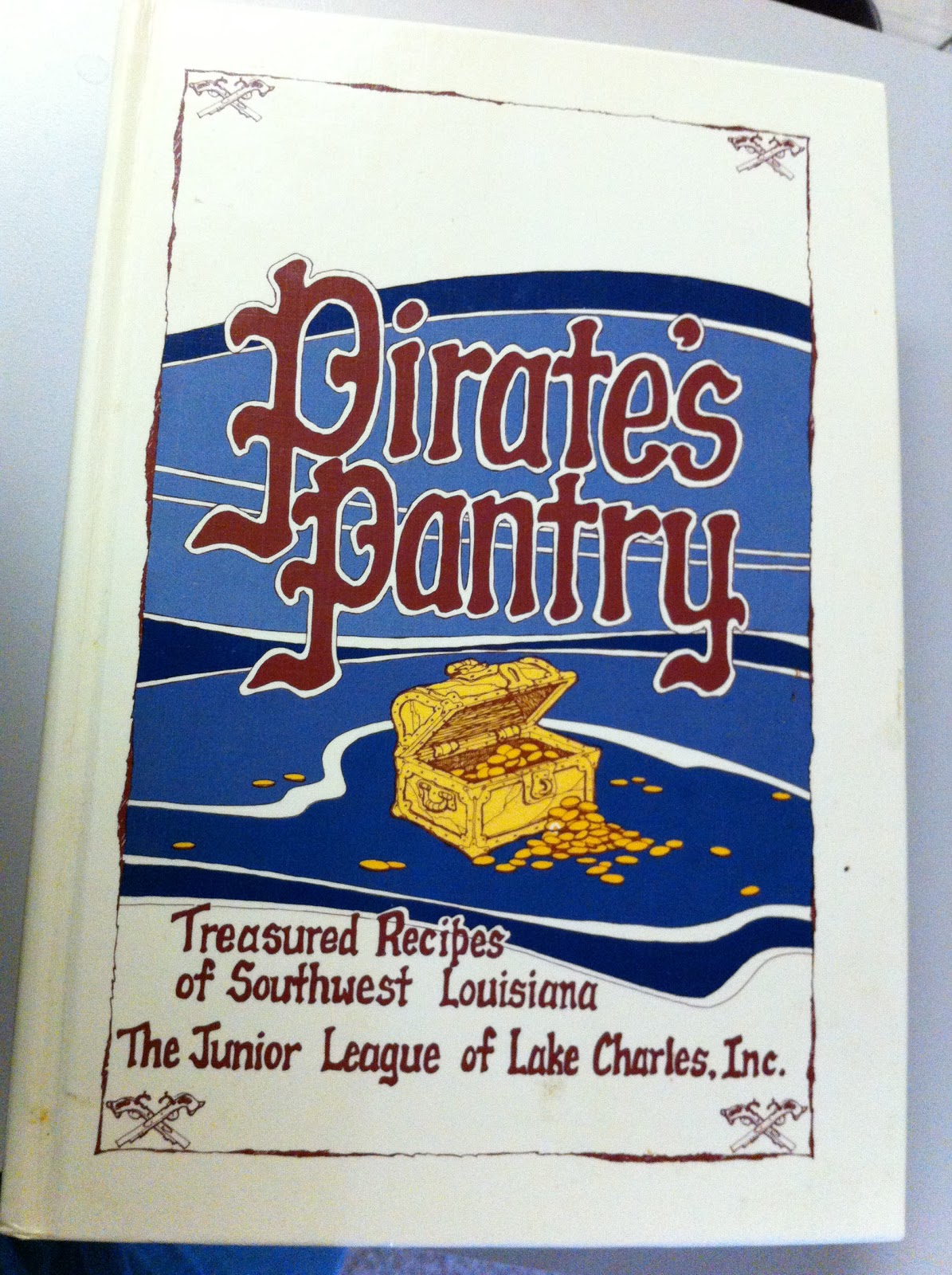
We've adopted a recipe from Pirate's Pantry by the Junior League of Lake Charles Louisiana.  Some of the recipes I'm not sure I'd ever dare try (e.g. Squirrel Gumbo or Turtle Soup), but it's definitely an authentic south Louisianan cookbook.  


Ingredients
For the roux: 
- 1/2 cup flour
- 1/2 cup canola oil

Everything else: 
- 1 large onion, diced
- 1/2 bell pepper, diced
- 3 celery stalks, diced
- fresh okra (or can use 1/2 teaspoon of file)
- 1 can of diced tomatoes
- seasoning blend: e.g. Old Bay Seasoning, gound cumin, ground coriander, paprika, worcestershire sauce, bay leaf, garlic, cayenne peppers, salt and pepper
- 1 lb raw shrimp
- smoked andouille sausage
- 3-4 green onions (used for garnish)


Recipe for Shrimp and Sausage Gumbo
1) Begin by prepping all the vegetables.


and gather all the seasoning you will need. In this gumbo we used Old Bay seasoning, ground cumin, ground coriander seed, paprika, worcestershire sauce, bay leaf, garlic, cayenne pepper, salt and pepper. 


2) Once everything is prepped, you are ready to begin the roux.  It really requires patience and constant stirring for a 30-45 mins (depending on fast everything goes).  Begin with the 1/2 cup flour and 1/2 cup of oil in a large dutch oven.


YouTube video: Chris created a 5 minute video to help show the process of how the roux is made.  Check out the video here.  The roux will go through different phases: tan, milk chocolate, brick and dark chocolate phase.  Here is a quick example of milk chocolate phase.


3) Once the roux is complete (again 30-45 minutes), add the vegetables and cook for 5 minutes. After, add 4 cups of water.  Stir for 2-3 minutes to help 'wash off' all the roux from the vegetables to help thicken the gumbo.


4) Add seasoning blend, diced tomatoes, diced okra, and andouille sausage (slided around 1/2 inch thick).  Add in another 4 cups of water.  Let simmer for 3 hours.


5) 20 minutes before plating, add in shrimp (or any other seafood you'd like). Stir in diced green onions right before serving over some jasmine rice.

This makes a great meal any time of the year, but highly suggested watching an exciting football game with great friends!

Monday, September 10, 2012

Perfect Herb Roasted Whole Chicken

This weekend I wanted to make a roasted whole chicken using our new roasting pan we bought this summer when we made the red snapper.  Since I've never done it myself, I wanted to make sure to follow a recipe with lots of reviewer comments.  Ina Garten has a Perfect Roast Chicken recipe that looked very promising with vegetables that roast with the chicken.  Ina puts most of her herbs inside the chicken and I was hoping to make an herb rub on the outside. So, I found an additional recipe Herb Roasted Whole Chicken which does just that.  The following recipe is my take on roasting a whole chicken.  The final product turned out incredibly moist and flavorful.  I'm looking forward to doing more roasting this fall!


Ingredients:
- 4 carrots, 2 onions, 1 fennel bulb
- sage, thyme and rosemary (or any selection of herbs)
- 1 lemon, 4 garlic cloves
- 1 whole chicken
- salt, pepper, canola oil

Recipe for Herb Roasted Whole Chicken:
1) Preheat oven to 450 degrees.  Chop carrots, 1 onion and fennel into large chunks and place in roasting pan


2) Chop sage, thyme and rosemary (~1-2 tablespoons per chicken). Add 1-2 tablespoons of canola oil and a generous handful of salt to make an herb mixture to rub on the outside of the chicken.


3) Chop 1 lemon into halves (or quarters), 1 onion into quarters, and a few garlic cloves.  Place aromatics inside the chicken and tie the legs together.


4) Lift the skin of chicken from the breast meat and place some of the herb mixture underneath the skin. Continue to rub herb mixture all over the rest of the chicken.  Salt the chicken generously.


5) Place chicken inside 450 degree oven for 75-90 minutes until the juices run clear and the chicken is a nice golden brown.  At this point the internal temperature is recommended to be over 165 degrees.  I let it go a little too long and it got up to 180, but it still turned out great.  


6) After you take it out of the oven, let it rest for a minimum of 10-15 minutes before slicing into it.

We paired the chicken with some herb roasted potatoes and sauteed green beans.


Friday, August 31, 2012

biomaRt: Find gene name using chromosome number and position

In a previous post, I gave a few examples of using biomaRt in R.  This is a continuation giving another useful example of using biomaRt: How to obtain gene names (e.g. HGNC) or really any information in listAttributes() function using only chromosome number and chromosome position. I was interested in obtaining the gene names for a set of mutations and decided to use biomaRt.  I created a tab-delimited file called 'positions.txt' containing three columns.  The first contained the chromosome number, followed by the start and end position (in this case they were the same).  The following code identifies what gene the chromosome position is in and reports the HGNC gene symbol.

# Load the library
library(biomaRt)

# Define biomart object
mart <- useMart(biomart="ensembl", dataset="hsapiens_gene_ensembl")

# Gives a list of all possible annotations; Currently there are 1668 listed
listAttributes(mart)

# Gives a list of all filters or criteria to search by; Currently there are 333 listed
# I chose to filter by: chromosome_name, start, end
listFilters(mart)

# Read in tab-delimited file with three columns: chromosome number, start position and end position
positions <- read.table("positions.txt")

# Extract HGNC gene symbol
results <- getBM(attributes = c("hgnc_symbol", "chromosome_name", "start_position", "end_position"), filters = c("chromosome_name", "start", "end"), values = list(positions[,1], positions[,2], positions[,3]), mart = mart)